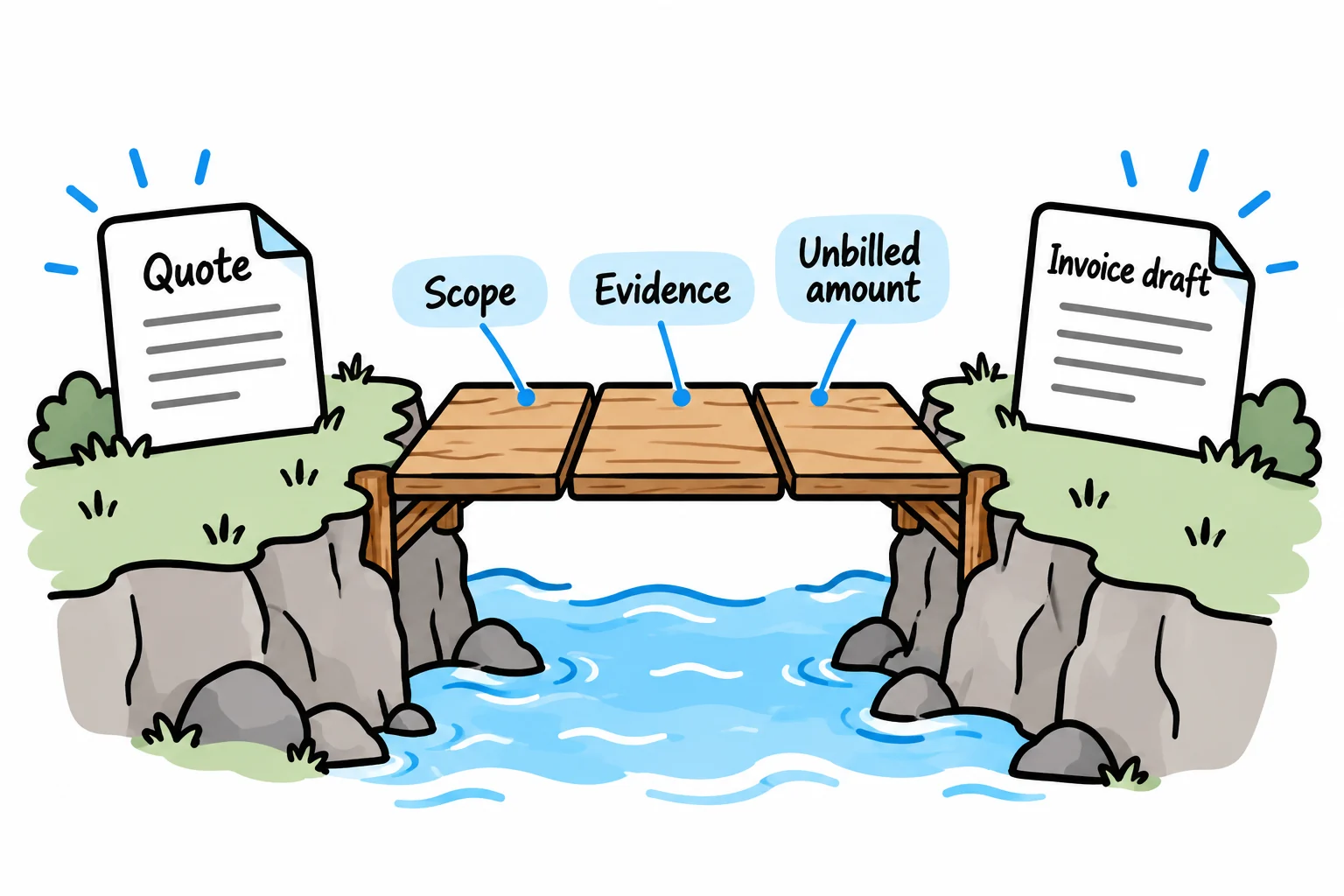
Quote-to-invoice automation connects agreed work, delivery evidence and billing preparation. Define when work becomes eligible for invoicing before connecting the tools, especially where jobs can be partly completed or changed.
An accepted quote gives the team a commercial reference. Whether it should produce a deposit request, a milestone invoice or a later completion invoice depends on the agreed terms. Keep that decision explicit in the workflow.
Clear responsibilities and visible delivery evidence are part of the solution. Connecting the software follows those operating decisions.
Define the work and the billing event
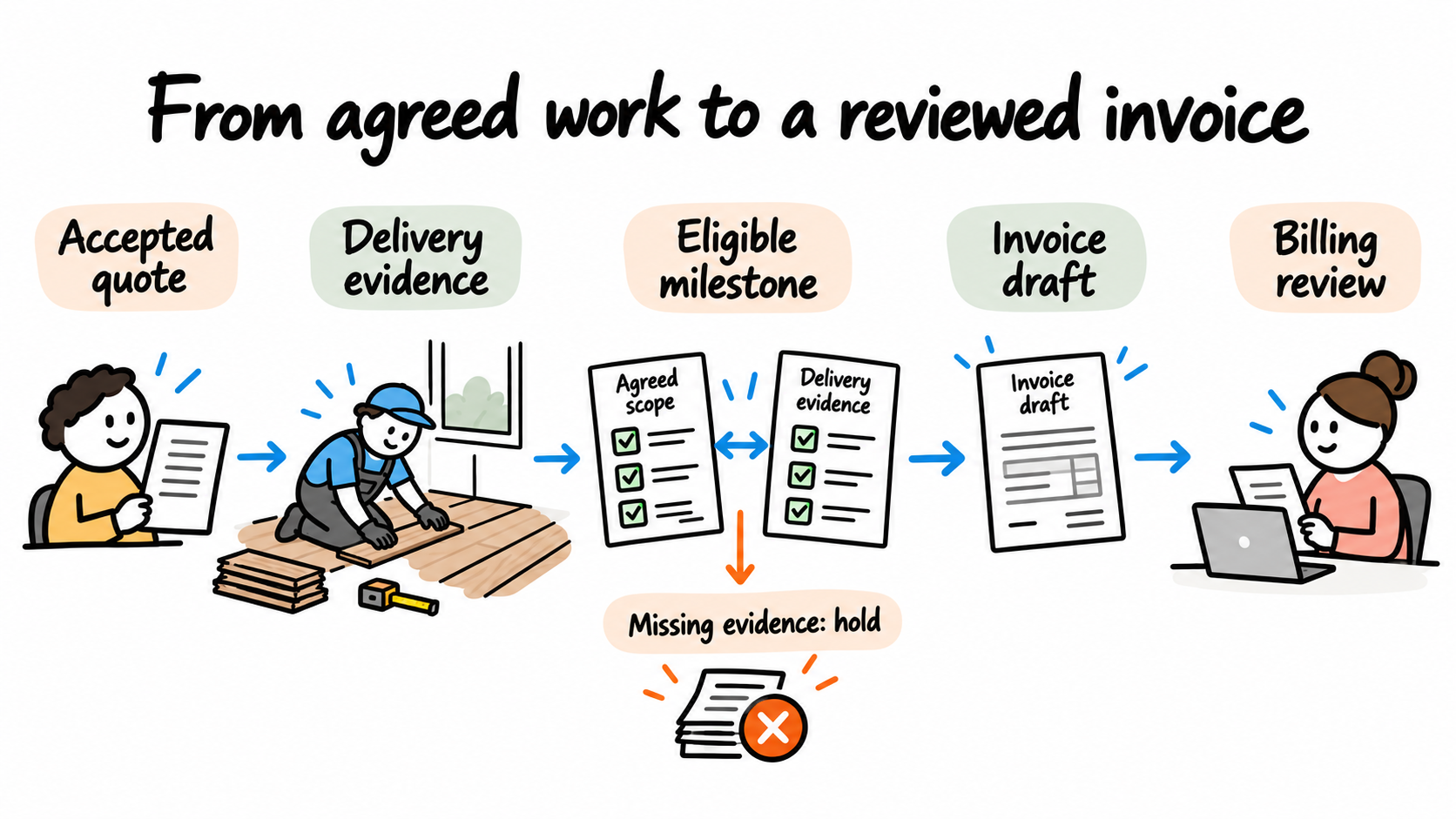
Start with one service type and one billing arrangement. Identify the quote version the customer accepted, the job or project it creates, and the evidence required for each billable event.
Record the billing entity and relevant customer references alongside the work. An email address on a job note may identify a site contact rather than the organisation that should receive the invoice. The customer-data guide explains ownership and record matching across systems.
Agree who can change the commercial scope, approve delivery evidence and release an invoice. Those decisions may belong to different roles.
Map the states between quote and invoice
Illustrative example: a commercial flooring installation company records an accepted quote, schedules installation and prepares invoice drafts after approved delivery milestones. This is a design example, independent of any case study.
Quote accepted -> Job created -> Work scheduled -> Work recorded
                                                     |
                                          Evidence and scope checked
                                                     |
                                      Eligible milestone identified
                                                     |
                                        Invoice draft -> Billing review
                                                     |
                                         Approved issue -> Reconciliation
Cancellation, disputed work and missing evidence lead to a hold or review state. They should remain visible rather than being forced through the normal completion route.
The state and handoff map records the entry checks, owner and expected next state. It is a planning model; it needs agreement against the business's actual contracts and operating rules.
Decide what makes an item invoice-ready
For the flooring example, the billing reviewer needs the accepted scope, the completed milestone, recorded delivery evidence and the agreed amount for that milestone. Additional work needs its own approved reference before it becomes billable.
| Situation | Required decision in this example |
|---|---|
| Agreed milestone fully completed | Check evidence and remaining unbilled amount before drafting |
| Only part of a milestone completed | Review whether the agreement permits a partial bill; do not infer it from percentage complete |
| Extra work requested | Link an approved change to the relevant job and billing amount |
| Delivery sign-off missing | Hold the affected item for the responsible owner |
| Job cancelled or disputed | Route to the agreed review process before billing action |
Invoice readiness is a state supported by evidence. A job being marked “done” does not establish that every commercial and billing check is complete.
Preserve the quote and change history
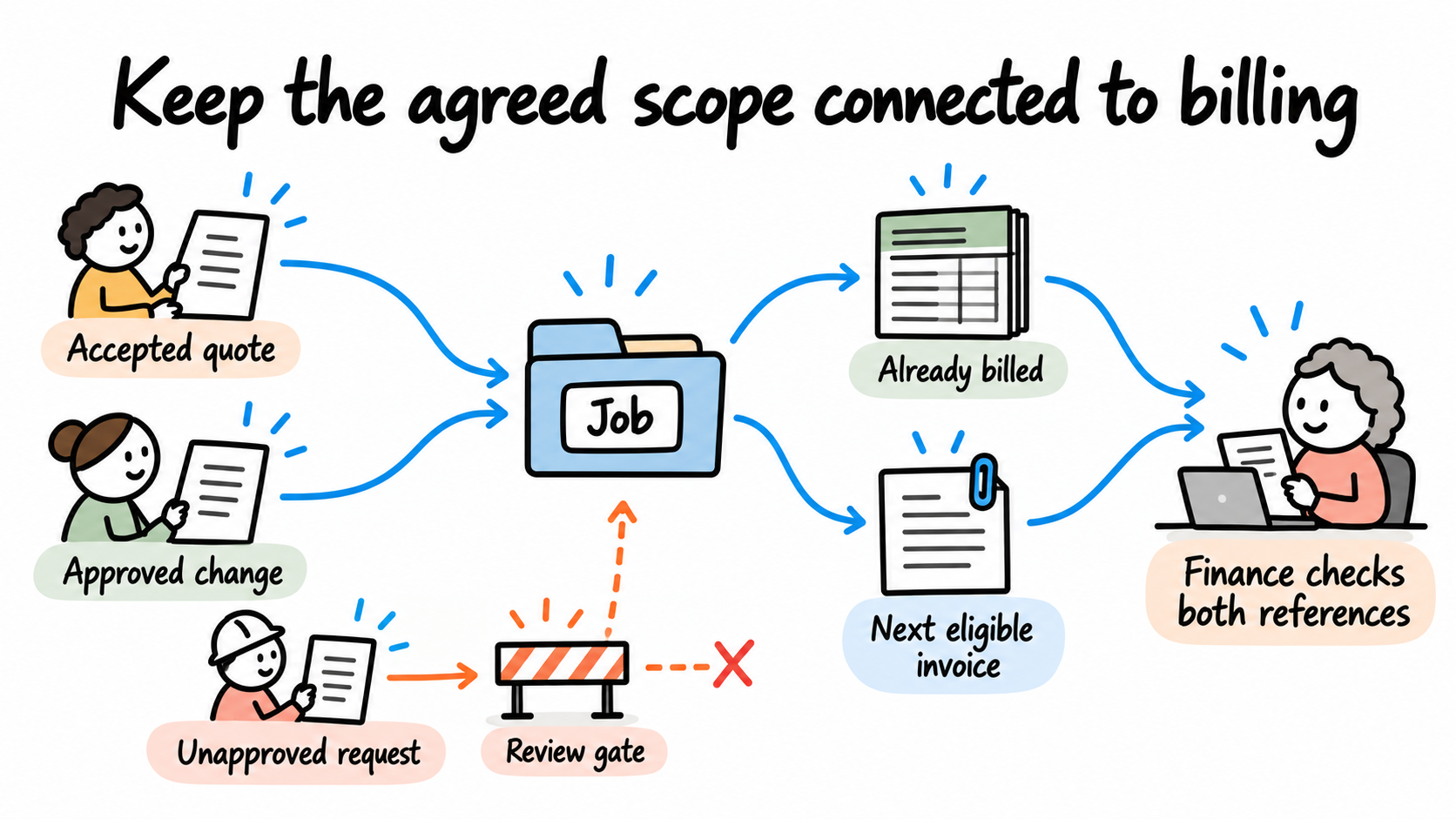
Link work to the accepted quote revision. If the scope changes, record the new agreement and distinguish the revised amount from what has already been billed.
An unapproved site note should not silently increase the invoice. The approval workflow guide describes how to bind an approval to the version of the request that was actually reviewed.
Keep progress billing separate from final billing. The workflow should be able to identify the eligible amount, amounts already represented by invoice drafts or issued invoices, and any items requiring correction. Agree how cancelled drafts, credits and revised invoices affect that position in the accounting system.
Handle repeated and uncertain events
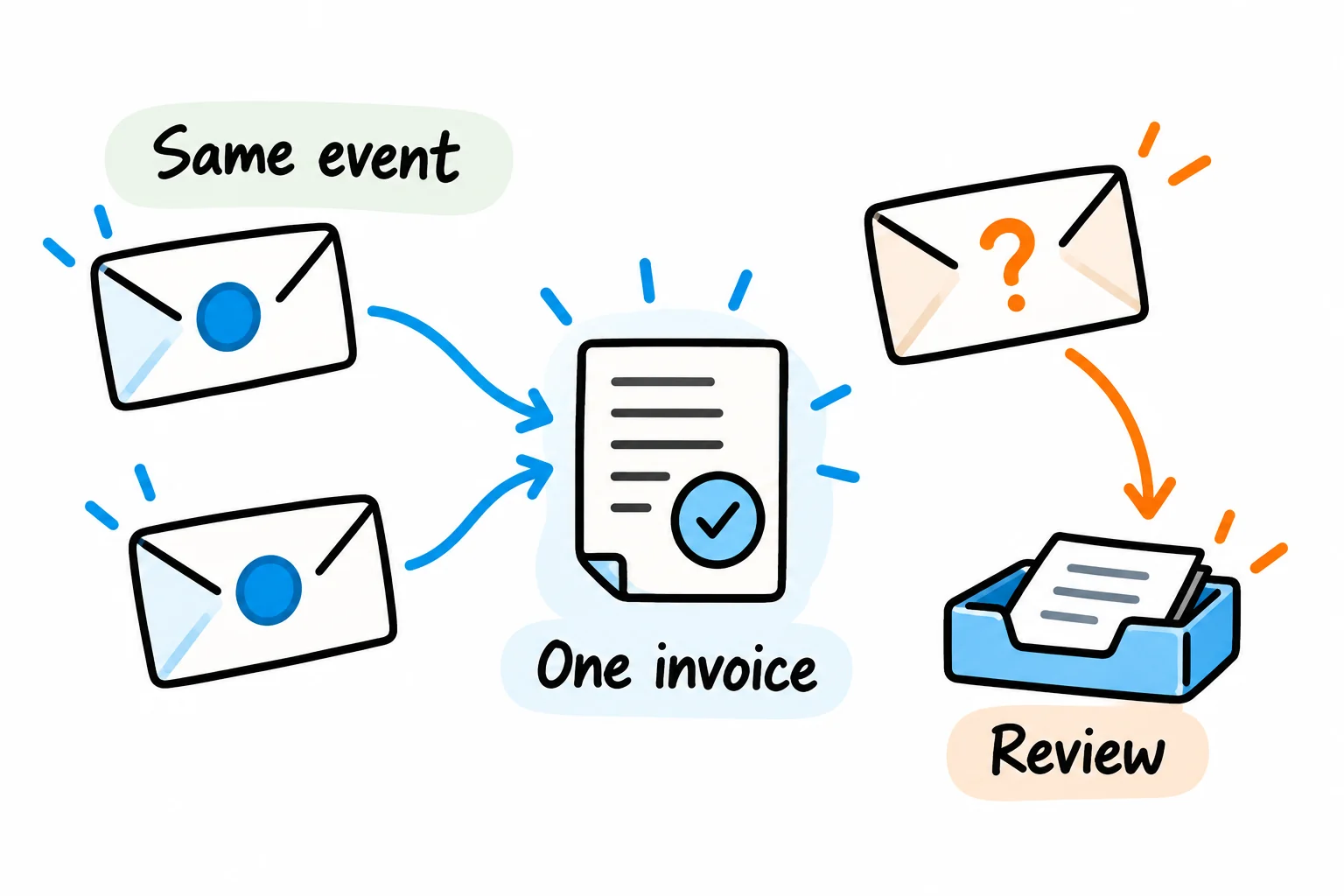
A delivery event may be sent again after a retry, or two people may mark the same milestone complete. Use a stable reference for the job, milestone and billing revision so the same intended billing action produces one result.
If invoice creation times out, reconcile whether the draft already exists before creating another. Keep the outcome uncertain until it can be established. Record the accounting-system reference once confirmed.
The acceptance checklist includes partial completion, changed quotes, duplicate events and uncertain invoice creation. Actual test outcomes remain blank for the implementation team to record.
Consider a simpler system arrangement
Check whether the existing job-management or accounting product already supports the needed handoff. A configured native process may meet the requirement with less custom integration to operate.
Where separate systems are needed, define which one owns each state and reference. Duplicating the full job lifecycle in several places creates more opportunities for contradictory status. Return only the billing information the delivery team needs to see.
Evaluate the complete handoff, including exception review and reconciliation. A successful connector action does not establish that the invoice reflects the right milestone, amount or customer.
Measure the delay you can influence
Record the time between approved delivery evidence and invoice readiness, and the further time to reviewed issue. Count missing-evidence cases, manual follow-ups and invoice corrections.
Keep payment timing separate. Earlier invoice preparation may help the billing process, but this workflow alone cannot establish that customers will pay sooner. Use the bottleneck method to investigate the stage actually causing delay.
Connect the handoff causing repeated chasing
We help reduce the chasing between accepted work, delivery and billing. We trace one job through the process, clarify who confirms completion and agree the evidence needed to make the work invoice-ready.
We can then introduce the process changes and implement the agreed checks or system connections, with testing for partial work, changes and repeated events. Bring an accepted quote, a completed job record and the current billing preparation steps.
See how we improve the handoff from accepted work to billing, or explore our broader business improvement and solution delivery services.
Discuss your quote-to-invoice workflow with Solvero.
About the author
Jateen Narsai is an IT professional with over 15 years’ experience in business and systems analysis, process improvement and software solution design. His work includes customer onboarding, approval workflows and reporting automation. He works across requirements, solution documentation, testing and implementation support, with a focus on reducing manual effort and making systems easier to use.